
Nocedode Ribeira
Some places only exist while someone still says their name.Scroll slowly: you are about to cross almost a thousand years.
San Cibrao de Nocedo · Os Blancos · Ourense, Galicia
The river of forgetting
The Romans were afraid of forgetting. So are we.
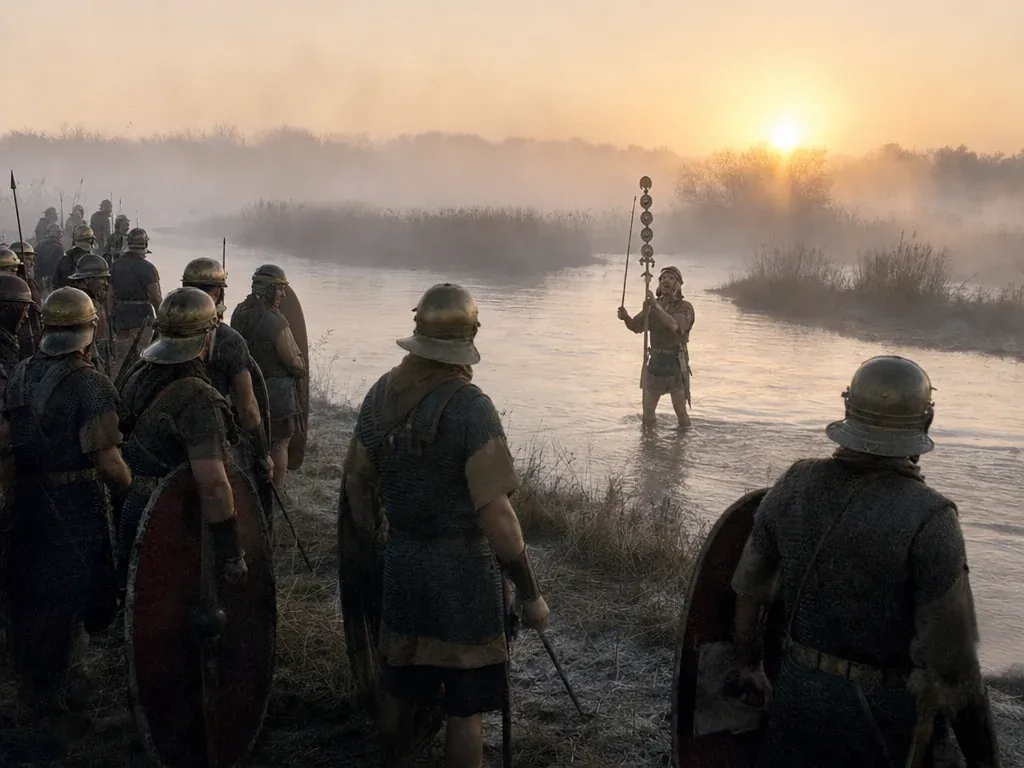
When the legions of Decimus Junius Brutus reached the river Limia, eight kilometres from here, the soldiers refused to cross. They believed it was the Lethe: the river that wipes the memory of anyone who crosses it.
Brutus snatched the standard from its bearer and crossed first. The others followed. Tradition adds that, from the far bank, he called each soldier by name.
This page does the same: it crosses the river with the documents in hand, and says the names.
Before paper
We don't know their names. We know they looked out over this same valley.
On the Outeiro de Almeide, within the parish, stood a castro: a fortified Iron Age village. Archaeologists located it in 1991 and collected Roman roof tiles and pottery. People already lived here when Rome arrived.
The first written record
Nine hundred and eighty-three years ago, someone dipped a quill and wrote "noceto". As far as we know, no one had written it before.
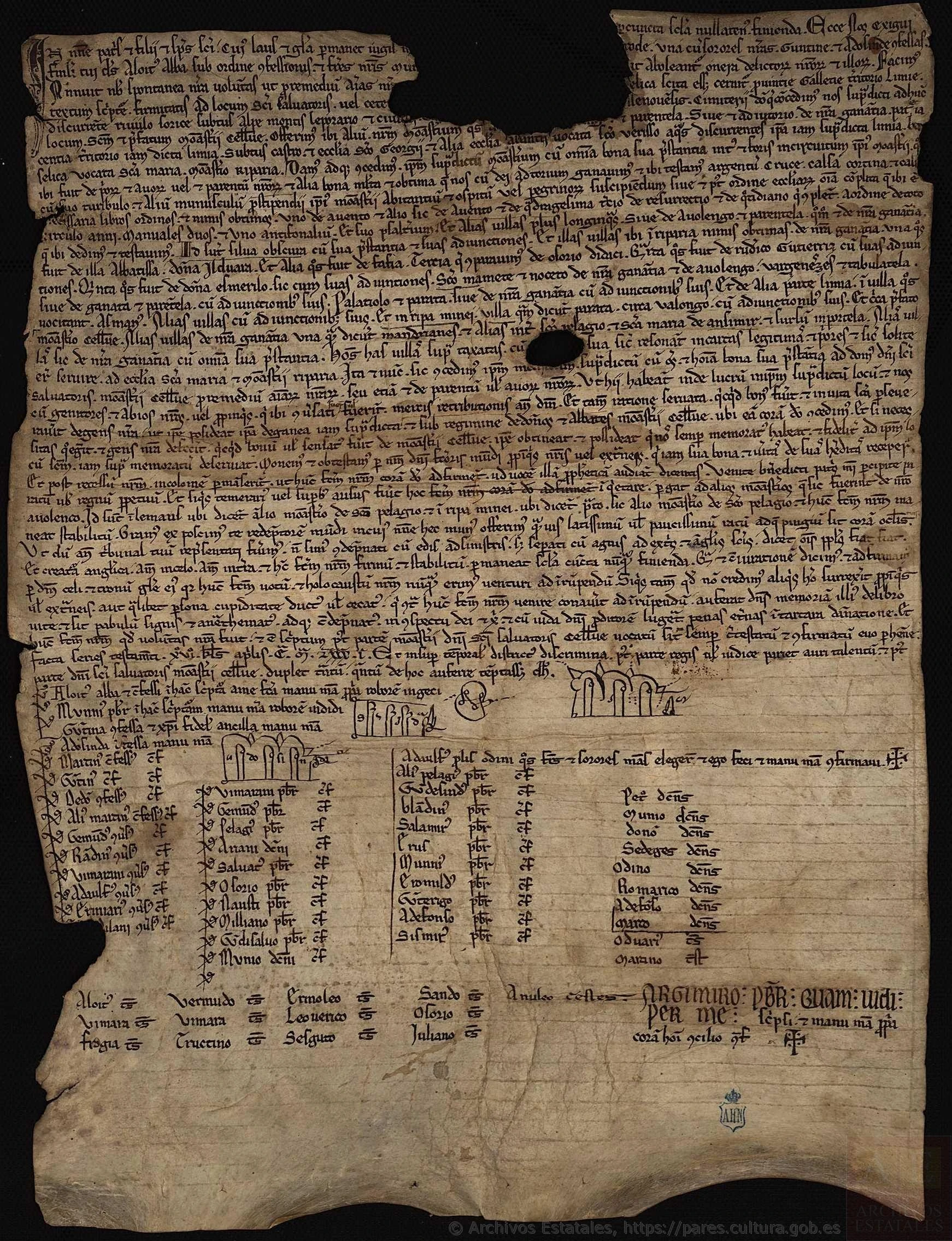
- National Historical Archive, Madrid. A 453 × 340 mm skin written 983 years ago.
- Hundreds of words in Visigothic script. A list of lands, churches and villages.
- And here, among them all: "noceto".
since someone first wrote Nocedo down
Abbot Alvito of Celanova and his siblings handed the monastery a long list of family properties. On that parchment, now kept at the National Historical Archive in Madrid, is the oldest known mention of the village: "noceto".
Noceto comes from the Latin nucetum: "place of walnut trees".
The church of San Cibrao
Hands no one remembers carved these stones. Eight centuries later, they are still here.
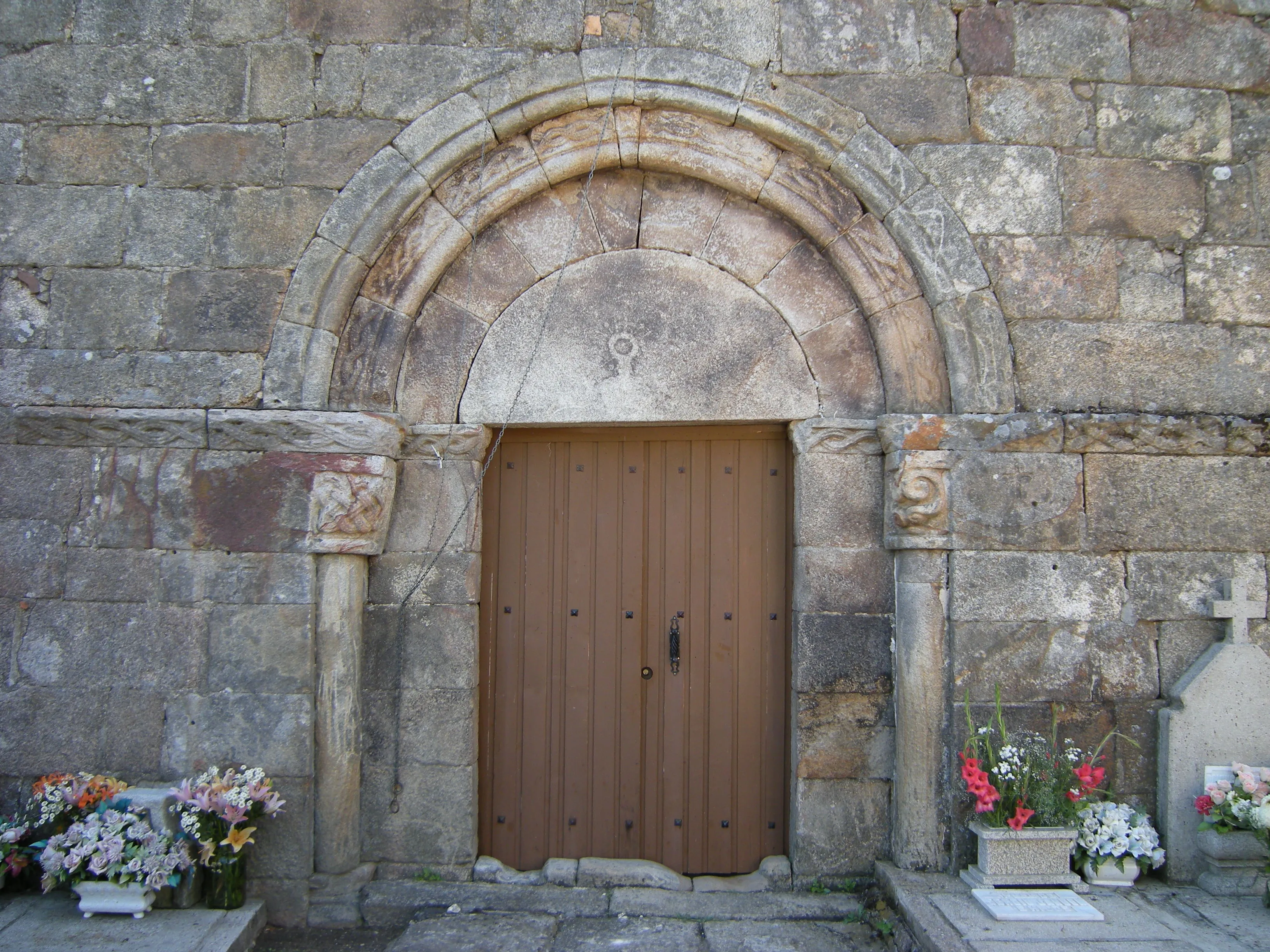
the church of San Cibrao has stood
In the 1210s-1220s the Romanesque church that still stands was built: rectangular nave and apse, a doorway carved with interlace, and a triumphal arch full of leaves, stems and four-petalled flowers.
The first names
For the first time, the people of Nocedo have names. Lorenzo measured the land. Benito ran the tavern. And there were two ovens where everyone's bread was baked.
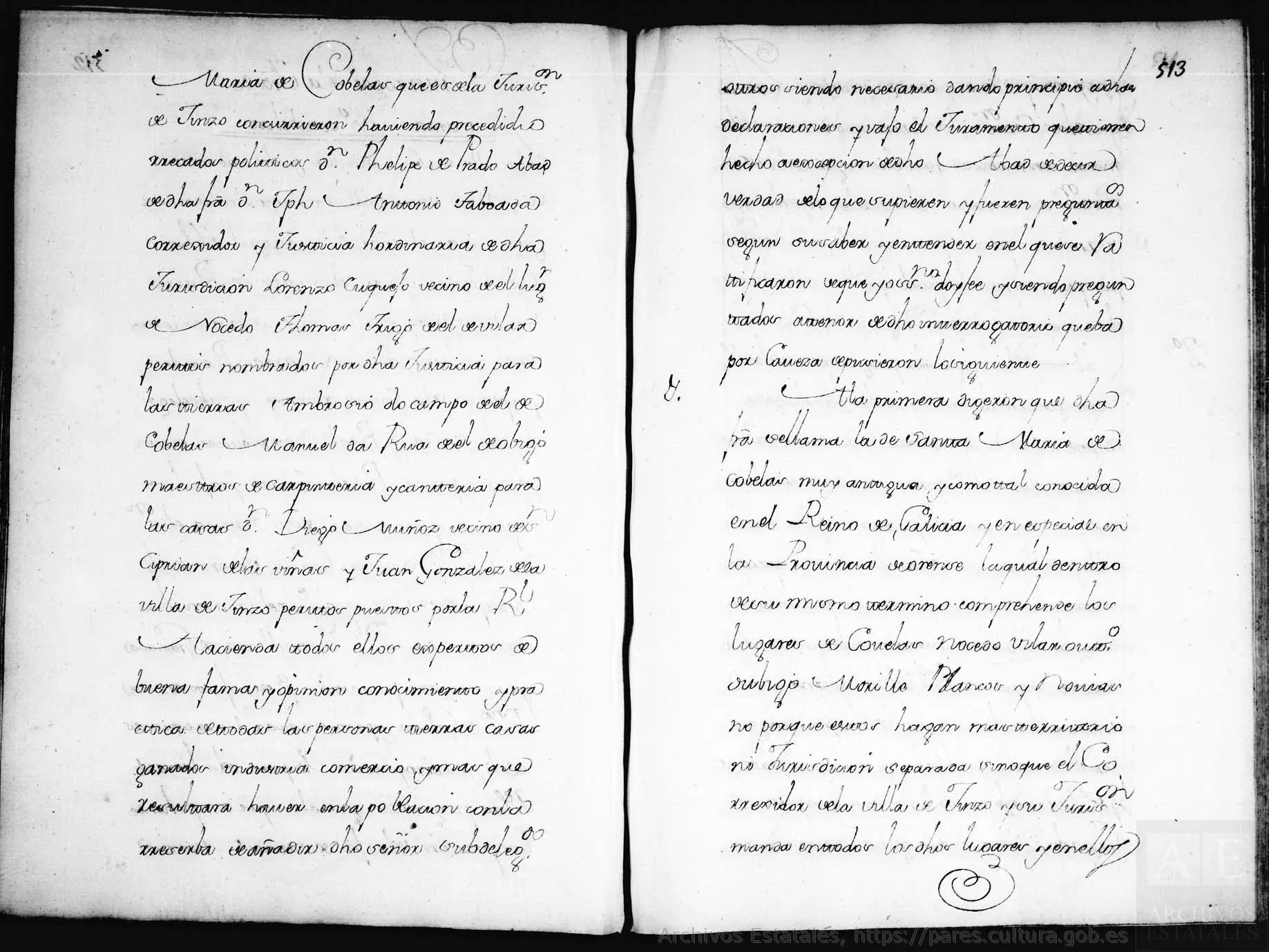
the neighbours answered before a notary
In 1752 the king ordered everything to be counted: land, houses, livestock and trades. Residents answered 40 questions before a notary. The 30 folios of their answer are kept at the General Archive of Simancas, and in them Nocedo already has people with names.
The war of the hidalgos
A surname was worth so much that three brothers spent three years in court defending it.

by people from Nocedo are kept at the Chancery of Valladolid
Being a hidalgo — minor nobility — exempted you from the taxes commoners paid. In 1783 the commoners of the whole Ginzo jurisdiction took to court those they said were posing as hidalgos. In Nocedo, families kept litigating until 1802.
The Royal Chancery of Valladolid keeps ten lawsuits brought by Nocedo residents. In them, births, weddings and children from three centuries ago were written down.
41 houses and good water
Forty-one houses. Two hundred and five souls. And water so good that someone wrote it down.
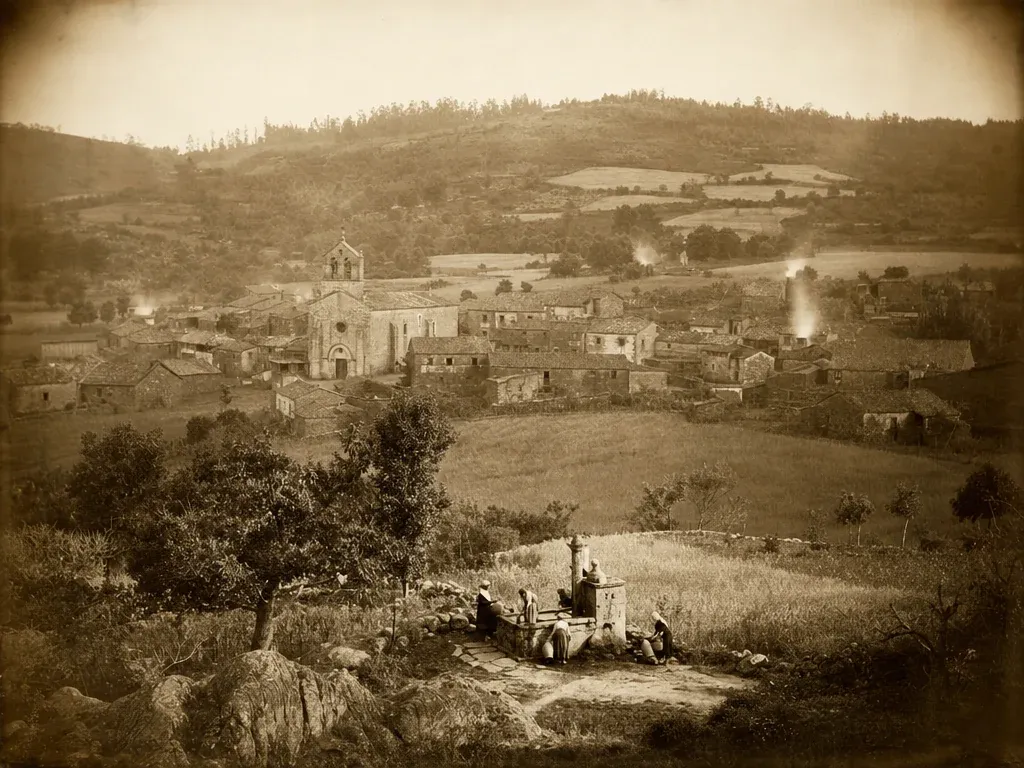
and 205 souls
Pascual Madoz's Dictionary portrays the parish of "Nocedo de Ribeira (San Ciprián)": 41 houses, 205 souls, a healthy climate and spring water "most exquisite and wholesome". It grew grain, pulses, fruit and flax; there were cattle, pigs, sheep and goats, hunting and some fishing.
The school at Nóveas
In a room the sun never reached, children were learning to write. One of them may have been your great-grandparent.
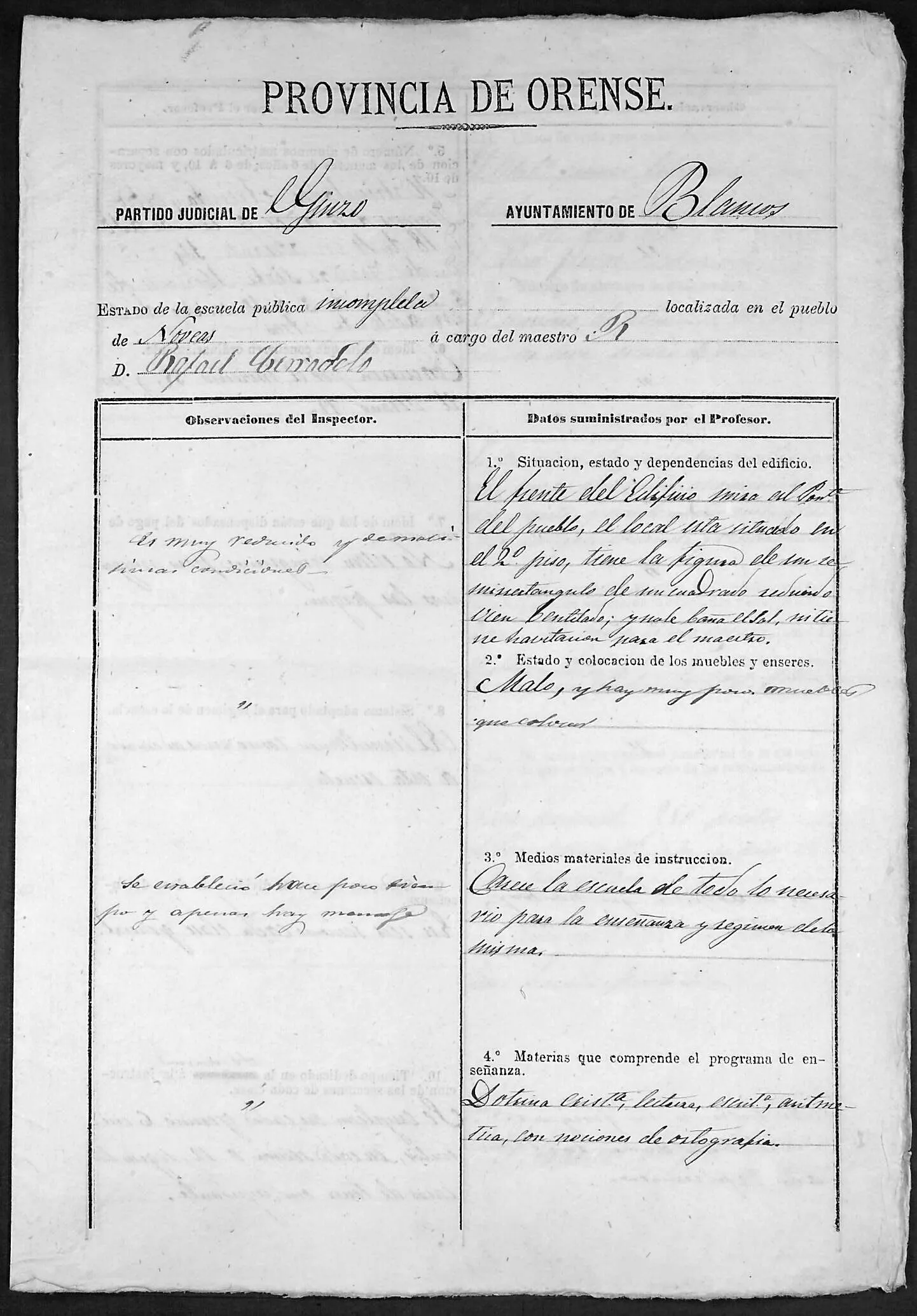
An inspector visited the state school at Nóveas. The teacher, Rafael Cerradelo, described it in writing: a second floor the sun never reached, no lodging for him and hardly any furniture. He taught catechism, reading, writing, arithmetic and spelling.
Black gold
In the sand of Nocedo's streams there is tungsten: the metal the war's arms factories were after.
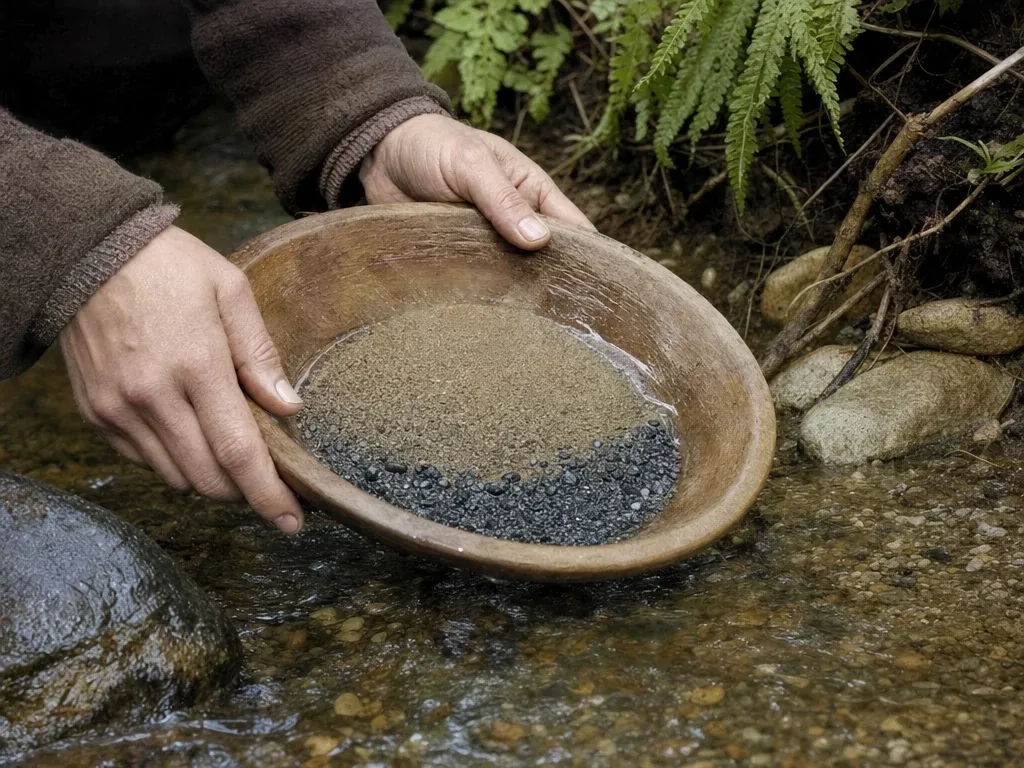
died in the Fontearcada trench
The Spanish Geological and Mining Institute records a tin and tungsten deposit in the sand of Nocedo's streams. In the same municipality, at Fontearcada, on 19 September 1941 a trench almost 20 metres deep collapsed while tungsten was being dug for the war. Thirteen people died.
The thread
No village explains itself
The documents tie Nocedo to monasteries, lordships and neighbouring villages. Every thread on this map is a document.
1 / 5
Nocedo and Nóveas: the parish of San Cibrao.
2 / 5
In 1752, seven hamlets shared one parish: Covelas, Vilarouto, Ouvigo, Mouril, Os Blancos, Nóveas and Nocedo.
3 / 5
Lorenzo Cuquejo was born in Guntín. Jerónimo López moved to Gudín. Amaro Cuquejo came from Baltar.
4 / 5
The monastery of Ribeira, six kilometres away, gave it its surname.
5 / 5
Celanova kept the parchment. Oseira taught the stonework. Monterrei ruled the land.
- 1752 · 1878Nóveas · 1.6 kmHamlet of the parish. School in 1878.
- 1752 · 1847Covelas · 1.7 kmHead of the parish in the census; Nocedo's church was annexed to it.
- 1752Ouvigo · 3.6 kmOne of the seven hamlets of the parish.
- 1752Mouril · 3.3 kmOne of the seven hamlets of the parish.
- 1752Os Blancos · 3.7 kmOne of the seven hamlets; today, the municipality.
- 1695Guntín · 3.7 kmWhere Lorenzo Cuquejo was born.
- 1847Garabelos · 3 kmNocedo's neighbour, according to Madoz.
- 1043Mosteiro de Ribeira · 5.9 kmThe parchment's monastery: the "de Ribeira".
- 1783Gudín · 6.1 kmHome of Jerónimo López, "native of Nocedo".
- 1781Seoane de Oleiros · 3.7 kmWedding of Francisco and Manuela Cuquejo.
- 137 a. C. · 1752Xinzo de Limia · 8.4 kmThe river Limia. Seat of the jurisdiction.
- 1750Baltar · 6.7 kmWhere Amaro Cuquejo was born.
- 1752Monterrei · 22.3 kmThe countess who ruled these lands.
- 1043Celanova · 28.4 kmThe monastery that received the gift.
- c. 1220Oseira · 64.2 kmThe model for the church's carvings.
The same valley
Someone stole the San Vitorio stone cross. In 2017, three devotees put a new one in its place. That is how a village defends itself.
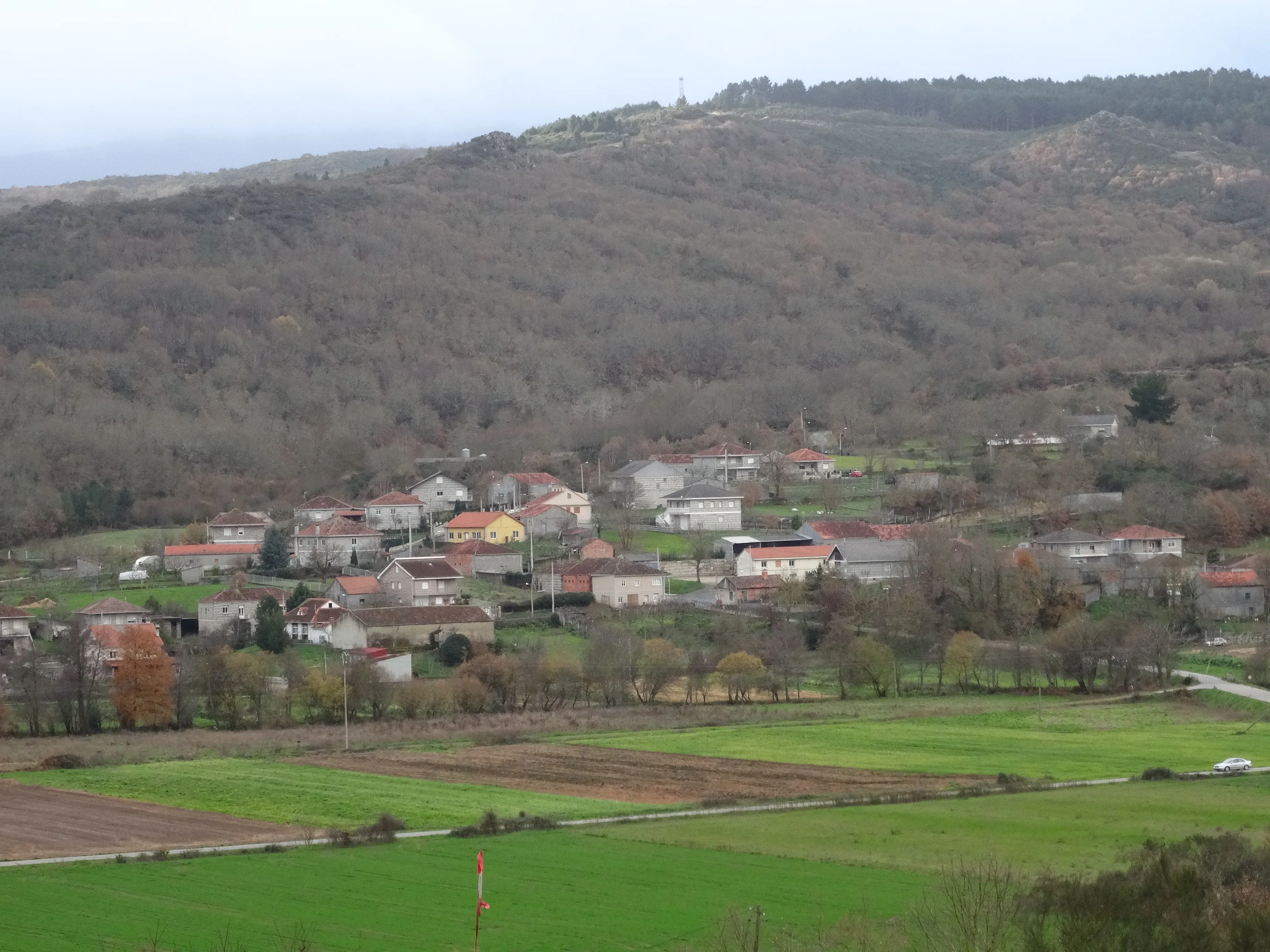
Nocedo and Nóveas still sit in the same Limia valley. The church still stands, the hillfort sleeps under the hill, and every August San Vitorio is carried in procession around his stone cross.
In 160 years, almost the same number of people
1847: Madoz ("souls"). 2000 and 2007: Galician Statistics Institute. Today's figure is missing.
The names
Find your surname
If your surname is here, part of you was already in Nocedo before you were born.
These surnames appear in the documents. Tap one to see where.
Appears in
Appears in
Appears in
Not there? Your memory could be the first record to name it. Share a memory
Edition 02
You write the next edition
The archives stop in 1878. The rest is kept by you: in a shoebox, in a wedding photo, in a grandmother's memory.
A photo of your grandparents' wedding, a house nickname, who left for Buenos Aires or Switzerland, a festival, a trade. Everything you remember about Nocedo and Nóveas helps keep it from being forgotten.
The memory wall
No memories yet. The first one could be yours.
Come
Come to Nocedo
It is 50 kilometres from Ourense. From Xinzo de Limia, take the road south towards Baltar.
- The church of San CibraoRomanesque, around 1220
- The valley from the hillWhere the hillfort stood
- San VitorioFestival and procession in August
A village does not die when its people leave. It dies when no one says its name.